
Sport Star - Team Manager Game
Gryphon GamesSports
4.3339.00 Reviews
- Version
- 1.4.0
- Installs
- 500.00K
- Age Rating
- Everyone
Screenshots
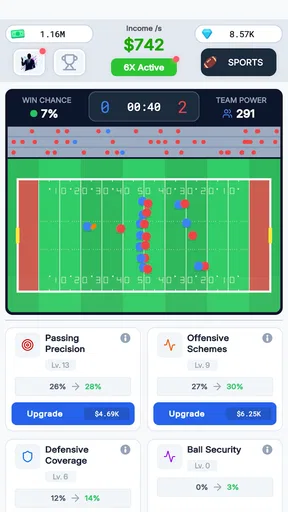
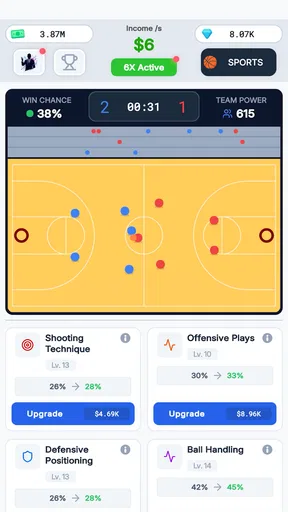
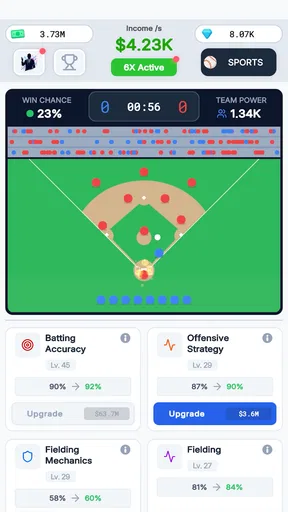
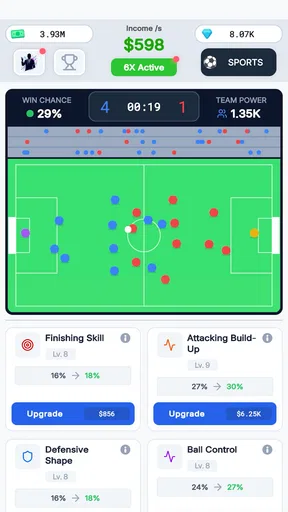
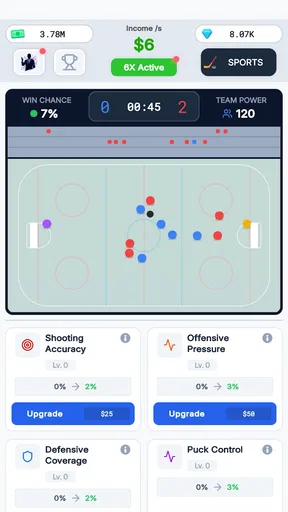
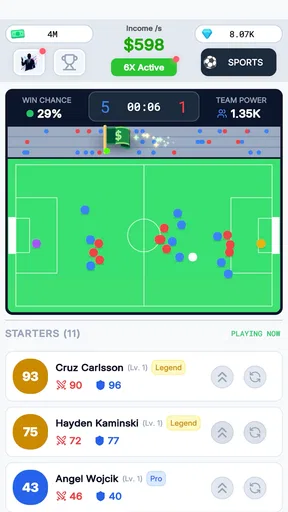
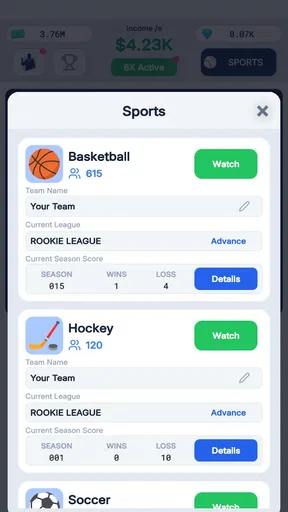
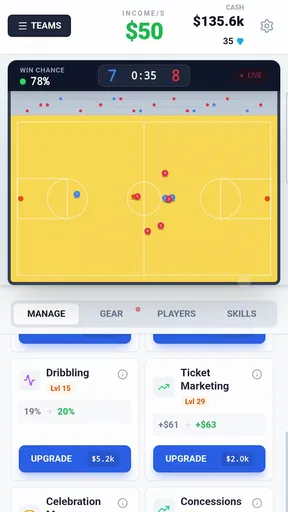
Our Review of Sport Star - Team Manager Game
 Analysis by Appyee
I went into Sport Star - Team Manager Game expecting a light sports management experience, and that is exactly where it makes the most sense. This is a free sports game from Gryphon Games, built around the simple fantasy of growing a team into something bigger. The idea is easy to understand, but the real question is whether the game remains enjoyable once progress, competition, and optional spending begin to matter.
My overall impression is positive, with an important qualification: this is best approached as a casual team-building game rather than a deep simulation for people who want every tactical or financial detail represented. It is available to an Everyone audience, runs on devices using iOS or Android 12 and later, and its current version is 1.4.0. That makes the entry barrier fairly low, although the operating-system requirement is worth checking before downloading on an older phone or tablet.
The store summary describes the experience as building a sports team empire, while the short description calls it Sport Star. Those phrases point toward the central appeal without telling the whole story. What kept me interested was the feeling of making a series of small managerial choices and then seeing whether the team’s broader direction felt worthwhile. It is a game about momentum more than one dramatic match.
How the team-building loop feels in everyday play
The most natural way to play is in short sessions. I could imagine opening it during a commute, between errands, or while waiting for an appointment, making a few decisions and leaving before the game became a full-time obligation. That format suits the subject matter: managing a team is easier to enjoy when I can think about the next improvement without feeling that I must complete a long sitting.
The strongest part of the concept is the sense of ownership. Even when the individual action is simple, the team gives each decision a little context. A choice is not just a button press; it contributes to the identity of the club I am trying to build. That is why the game works better when I set a personal goal, such as developing steadily, protecting resources, or seeing how far I can go without paying.
I would not recommend rushing through every available improvement. A useful approach is to pause after each meaningful upgrade and ask whether it actually helps the next stage of progress. In management games, spending everything immediately can create a temporary high point followed by a frustrating slowdown. Here, I found that a measured rhythm made the experience feel more strategic, even when the underlying systems were not as elaborate as those in a full simulation.
One practical routine is to play in two passes. During the first pass, I check what the team needs and identify the most useful next step. During the second, I act only after considering the cost of doing so. This avoids the common mobile-game habit of tapping through rewards and upgrades without understanding their effect. It also makes the game feel less like a sequence of automatic prompts and more like a small planning exercise.
The trade-off is depth. Players who want detailed formations, extensive scouting, realistic contracts, or a large set of sport-specific rules may find the experience too streamlined. Sport Star is more approachable because it does not demand that I learn a complicated management manual, but that same accessibility limits how much control I can expect. It is a better fit for quick decisions than for a long-form simulation career.
Progress is satisfying, but it can create pressure
Progression is the main source of motivation, and it also creates the game’s main emotional pressure. Every improvement suggests that the next one will make the team more capable, more established, or more competitive. That forward pull is effective, but it can encourage me to treat every delay as a problem that needs solving immediately.
I think the healthiest way to play is to separate progress from urgency. If an upgrade takes time or resources, that does not automatically mean I am playing incorrectly. The game is more pleasant when I accept that not every session needs to produce a major breakthrough. This is especially important in a free game with optional purchases, because impatience can make a small obstacle feel larger than it really is.
The purchase range is broad, from $0.99 to $109.99 per item. That fact alone does not prove that spending is required, and I would not claim that it does. It does mean that players should decide their own boundary before they begin. For a child, that conversation belongs with a parent or guardian; for an adult, a simple rule such as “no purchases during a frustrated session” can prevent impulsive decisions.
I found it useful to treat premium currency or paid boosts, where offered, as convenience rather than as part of the basic definition of success. If I could not afford an improvement through normal play, I waited instead of assuming that the purchase was the intended solution. That approach may make progress slower, but it also gives a clearer picture of whether the underlying game is enjoyable on its own.
There is another subtle pressure that appears in this type of game: the fear of wasting a resource. When every decision seems permanent, players can become overly cautious and stop experimenting. My advice is to reserve a small portion of resources for testing. A perfect plan is less valuable than learning how the team responds to different priorities, and experimentation makes the management side more engaging.
What free means here, and how to approach spending
The game is free to download, but it includes in-app purchases. That distinction matters because “free” describes access, not necessarily every possible shortcut or enhancement. I could start without paying, which is the right arrangement for anyone who wants to sample the game before deciding whether it deserves more time.
My spending advice is straightforward: play long enough to understand the normal progression before buying anything. If I purchase early, I cannot tell whether I am paying for genuine enjoyment or simply removing a problem I have not yet learned to manage. Waiting also makes it easier to judge whether the game’s pace suits me.
For families, the Everyone age rating is reassuring in terms of the intended audience, but it should not be confused with a promise that every player will make sensible purchases. I would still use the device’s purchase controls and discuss a budget before handing the game to a child. The age label and the presence of paid items answer different questions.
There is a useful middle position between refusing all purchases and spending freely. A player who enjoys the game can choose a fixed limit and regard it as entertainment spending, while someone who dislikes paid acceleration can remain entirely free-to-play. The important point is to make that decision outside a moment of pressure. The broadest item price makes an unplanned tap more significant than the small entry price might suggest.
Fairness, competition, and the limits of what I can judge
Fairness is the hardest part to assess from the outside because it depends on how the game handles progression and competition in practice. I can say that the purchase menu includes items ranging from inexpensive to very expensive, but I cannot turn that fact into a claim that the game is pay-to-win. That would require knowing exactly what each purchase changes, how non-paying players progress, and whether paid advantages affect other players directly.
My practical recommendation is to watch how the game makes you feel before spending. If normal play gives you meaningful choices and a reasonable sense of movement, the free route may be enough. If every important decision appears to point toward a purchase, that is a sign to step back. This is not an accusation against the developer; it is a sensible test for any free management game with optional transactions.
Players who enjoy competition should be especially clear about their expectations. A competitive manager may want a level field in which planning matters more than payment. If Sport Star places players in situations where purchased progress has a direct effect, that could change the experience substantially. Because the available product facts do not explain those competitive rules, I would try the game first and avoid paying until I understood whether competition was central to my enjoyment.
For a more relaxed player, fairness may mean something different. If I am building a personal team and comparing my progress only with my own previous results, optional purchases are easier to ignore. The game then becomes a private management challenge. That is one reason I would recommend it more readily to casual players than to people seeking a strict, tournament-style environment.
Compared with traditional sports games, this title appears better suited to people who enjoy the club-building side than to players looking for direct control over every play. Compared with heavyweight manager simulations, it should be easier to pick up and play, but likely less satisfying for readers who want detailed realism. Its position between those two groups is both its strength and its limitation: it can introduce management ideas without demanding a large time commitment, yet it may leave experts wanting more control.
Questions I would ask before installing
The first question is whether it works on my device. The minimum operating-system requirement is version 12, so anyone using an older phone or tablet should check that first. There is little value in planning a purchase or a long-term save if the device cannot run the current version.
The second question is whether I need to pay to enjoy it. No purchase is needed to download the game, and I would begin without spending. The presence of items priced from $0.99 to $109.99 means I would set a limit in advance, but it does not by itself establish that payment is mandatory for progress.
The third question is whether it suits my preferred kind of sports game. If I want a quick team-building loop and enjoy watching a club develop through repeated decisions, it is a reasonable choice. If I want to control matches directly, recreate real-world leagues, or manage every contract and tactical detail, I would look toward a more specialized sports simulation instead.
The fourth question is whether the game is appropriate for a younger player. The content rating is Everyone, which makes it broadly accessible, but the in-app purchase system still deserves adult supervision. I would treat the rating as information about content suitability, not as a substitute for purchase controls.
The fifth question is how much commitment I want. With over 500K installs and an average rating of 4.3 from around 6.2K ratings, the game has attracted a substantial audience, but popularity does not guarantee that its pace will suit me. I would use the free entry as a trial and judge it by whether I look forward to the next management decision rather than by its audience size alone.
Who should play, and who should skip it
I would recommend Sport Star to casual sports fans, idle-management enthusiasts, and players who like the idea of growing a team without learning a dense simulation system. It is also a good candidate for someone who wants a game that can be checked in short sessions rather than requiring a full evening. The team-empire theme gives ordinary upgrades a clear purpose, which helps the experience feel more coherent than a collection of disconnected tasks.
I would be more cautious recommending it to competitive players who need transparent rules around paid advantages. Until I had personally seen how competition and purchases interact, I would not spend heavily or treat the game as a serious test of managerial skill. The same caution applies to anyone who becomes frustrated by waiting, repeated progression gates, or the temptation to solve slow moments with money.
Players who dislike in-app purchases altogether should probably skip it. Even if they never buy anything, the knowledge that purchases exist may affect how they interpret progress. A paid premium sports game or a conventional console-style manager may be a better match for someone who wants one clear upfront transaction and no spending decisions inside the experience.
On the other hand, someone who can ignore optional offers and enjoys setting personal limits may find the free route perfectly workable. My best experience came from treating the game as a small daily hobby, not as a race. That mindset turns the slower moments into part of the management challenge instead of evidence that I must open my wallet.
My trust verdict after testing the fit
Gryphon Games has made a sports management game with an inviting premise and a low-risk way to begin. The free price makes trying it straightforward, and the Everyone rating broadens its appeal. The current version, 1.4.0, is the one I would look for when checking compatibility and deciding whether the game has received the changes available on my device.
My trust in the experience depends less on the headline concept and more on how consciously I play it. I trust it as a casual team-building game when I keep purchases optional, set a budget, and judge progress by my own goals. I would not trust it blindly as a competitive environment without first understanding how paid items influence advancement and whether non-paying players remain comfortable.
The most important lesson is to protect the part that makes the game enjoyable: making decisions. If spending removes every meaningful delay, the team may grow faster but the management fantasy becomes thinner. If I keep enough friction to plan, test, and recover from an imperfect choice, the game has more room to stay interesting.
So, would I recommend it to a friend? Yes, with conditions. I would suggest downloading it for free, playing through the early team-building experience, and deciding afterward whether its rhythm feels rewarding. I would not recommend buying the most expensive item simply because progress feels slow, and I would steer serious simulation fans toward a deeper alternative.
My final verdict: Sport Star is worth trying for casual sports-management fans who want accessible team growth, but its best value comes from patient play and disciplined spending. It is not the right choice for everyone, yet it offers a pleasant middle ground between a direct sports game and a demanding management simulator. If that middle ground sounds appealing, the free entry gives you a sensible way to find out without committing money first.
Verdict
Strengths of Sport Star - Team Manager Game
- Simple controls make matches easy to follow and manage.
- Team-building choices give each season a personal strategy.
- Short sessions work well for quick mobile play.
- Progression rewards regular play and long-term planning.
- Lightweight gameplay runs smoothly on many devices.
Limitations of Sport Star - Team Manager Game
- Advanced tactics may feel limited for experienced managers.
- Progress can become slower without frequent participation.
- Some upgrades may encourage in-app purchases.
- Match outcomes can occasionally feel influenced by randomness.
- The interface may take time to learn for new players.
Other Releases by Gryphon Games
View All
Planet Crusher: Mine & Attack
Arcade3.9

Race Star - Team Manager Game
Racing4.0

Track Star - Team Manager Idle
Sports4.2

Fight Star - Team Manager Idle
Sports4.1
Similar Picks in This Category
View All
8 Ball Pool
Miniclip.com4.8

Pooking - Billiards City
AIM TOP GAME TECHNOLOGY LIMITED - pool4.6

Carrom Pool: Disc Game
Miniclip.com4.4

EA SPORTS FC Soccer Mobile 26
ELECTRONIC ARTS4.6

World Soccer League
mobirix4.3

Soccer Cup 2026: Football Game
INLOGIC SPORTS - football tennis golf soccer4.3
Frequently Asked Questions
What is Sport Star - Team Manager Game about?
Sport Star - Team Manager Game is a sports management simulation in which you build and lead your own team. Instead of controlling every action directly on the field, you focus on important decisions such as selecting players, improving their abilities, arranging tactics, managing resources, and guiding the club through competitions. It is designed for players who enjoy strategy, progression, and long-term team development.
Is Sport Star - Team Manager Game free to download and play?
The game can generally be downloaded for free, allowing players to begin managing a team without an upfront purchase. However, free-to-play sports management games may include optional in-app purchases for premium currency, upgrades, faster progression, or additional content. Before downloading, check the store listing for the current pricing details and review your device’s purchase settings if children may use the app.
Does the game require an internet connection?
An internet connection may be needed for certain features, including account synchronization, advertisements, online events, updates, leaderboards, or other connected services. Some management activities might remain available when you are offline, but this can vary depending on the version and device. For the most reliable experience, launch the game while connected and avoid assuming that every feature will work without internet access.
What kind of gameplay and management decisions can I expect?
The main appeal comes from making decisions that influence your team’s performance over time. You may need to organize the squad, develop players, choose suitable tactics, manage club resources, and respond to match results. Progress is usually based on planning rather than quick reflexes, so the game is best suited to users who enjoy gradually improving a team and evaluating the consequences of their choices.
Is Sport Star - Team Manager Game suitable for every player?
The game is a good choice for sports fans and strategy players who enjoy team building, progression systems, and management challenges. It may be less appealing to users looking for direct, action-focused sports controls or completely unrestricted gameplay. Because features, advertisements, chat functions, and in-app purchases can vary by platform and region, parents should review the store rating and available purchase controls before allowing younger players to download it.
Play our best games!


